The Only Cleaning Schedule You’ll Ever Need: Daily, Weekly, Monthly
Keeping up with housework can feel like a never-ending cycle. Just when you finish the laundry, the kitchen is full of dirty dishes. You finally mop the floors, and then the dog and kids (or partner) tracks dirt in the house. If you’ve ever felt like you’re cleaning all the time but never caught up,…
Keeping up with housework can feel like a never-ending cycle. Just when you finish the laundry, the kitchen is full of dirty dishes. You finally mop the floors, and then the dog and kids (or partner) tracks dirt in the house. If you’ve ever felt like you’re cleaning all the time but never caught up, you’re not alone.
I spent years trying to follow complicated cleaning schedules that made me feel behind before I even started. Most of them had long daily lists that were impossible to keep up with, especially while juggling work, kids, and everyday life. Eventually, I realized the problem wasn’t me; it was the cleaning schedule.
That’s when I created a cleaning schedule that finally worked. It’s simple, repeatable, and realistic. It includes daily habits, weekly resets, and monthly focus areas, plus one full month dedicated entirely to self-care (sometimes what needs the reset most isn’t the house…it’s us).
Why Most Cleaning Schedules Don’t Work
Let’s talk about why so many systems fail:
- They assume you have hours a day to clean.
- They focus only on surface cleaning and ignore the deep-clean tasks that creep up and overwhelm you.
- They’re too rigid. If you miss a day, you feel like you’ve failed the whole system.
- They never give you a break. You’re expected to clean at 100% speed, 365 days a year.
I knew I needed something different. I don’t work that way, and if I haven’t this far in life, I probably never will.
The Simple Cleaning Schedule That Keeps My House Running
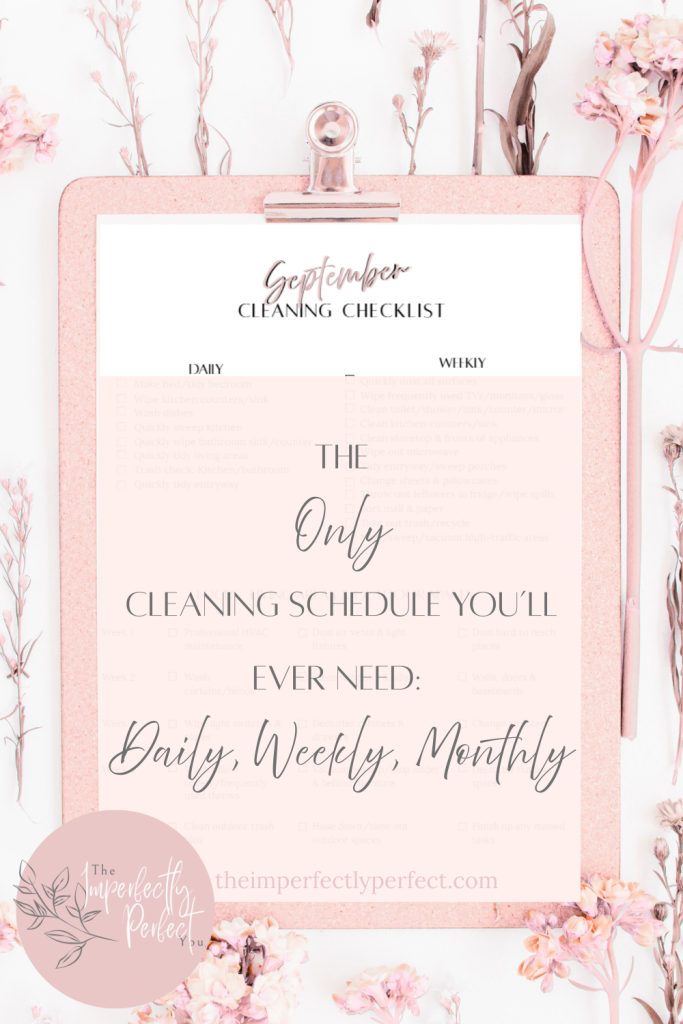
This printable cleaning schedule breaks the list into three parts:
- Daily Checklist – small habits that are quick and easy
- Weekly Checklist – the reset that makes the whole house feel fresh.
- Monthly Focus Areas – rotating deep-clean tasks so nothing gets left behind.
Here’s how it works.
1. Daily Cleaning Checklist
The daily list is simplified on purpose. These are the things that prevent chaos and keep you from falling behind.
If you’re following the full checklist (pretty) regularly, these will take 2-5 minutes per task throughout your day and include small, quick tasks in the main rooms. When you start turning them into habits rather than a rigid schedule, something amazing happens: You get things done, and when you miss a day, you don’t beat yourself up with guilt.
If you only get one or two things done, that’s okay too! The goal is to keep it from building up, and the time it takes to do the weekly cleaning is cut down significantly. These are just enough to keep the day from getting away from you and your weekly tasks smoother.
2. Weekly Cleaning Checklist
Once a week spend a little extra time doing the basics that keep your house livable. Think of it as a whole-house reset. I do mine all on Saturday mornings typically, and then I still have another day if something comes up. I can still enjoy my Saturday night and Sunday. Maybe doing a couple things a day or certain rooms per day is what works for you. Play around with it and see what fits your home and your lifestyle.
With a weekly rhythm, your house will always feel reasonably fresh, even if you had a crazy week.
3. Monthly Deep-Clean Focus Areas
Here’s the secret sauce: every month, you’ll focus on one main area of your home. This way nothing piles up into a giant project, but nothing gets forgotten either. By the end of a full year, every part of your home has been deep cleaned at least once, without burnout. I add a few of the monthly tasks to each week to spread it out over the month, but you may find an easier way for you to do it, like spending an entire weekend doing all the monthly tasks. If you have problems with feeling overwhelmed, I don’t recommend trying to get it all done in one weekend.
This is an example of the rest of the year’s monthly focuses, plus January. The best part is after you cycle through the focused areas once the next month is dedicated to a full month of self-care. The monthly focus areas rotate throughout the year and include seasonal and yearly maintenance.
- August – Kitchen deep clean
- September – Living areas & outdoor spaces
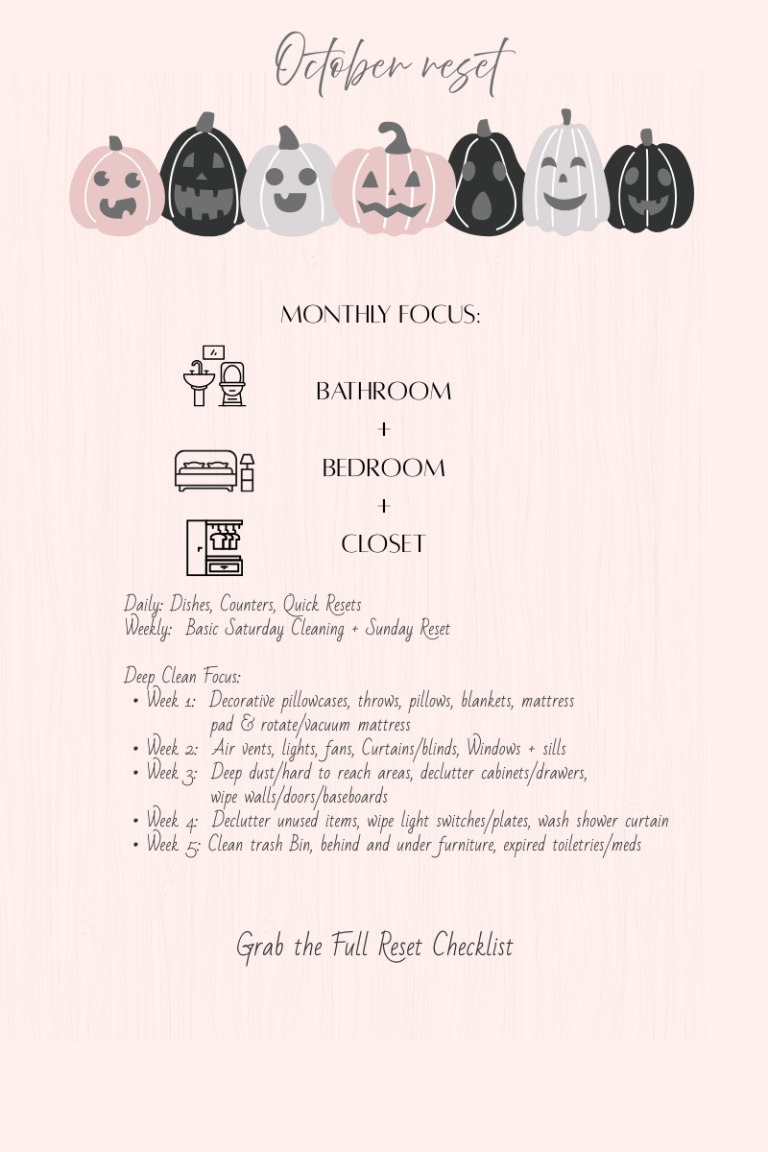
- October – Bathrooms, bedrooms & closets
- November – Office, paper files & digital declutter
- December – Laundry room, hallways & “catch-up”
- January – Self-care month (reset yourself, not just the house)
If you’re still dealing with a lot of clutter, you can work on decluttering in time blocks for the monthly focus room.
Why I Added a Self-Care Month
Cleaning schedules that ignore you don’t work long-term. I built a self-care month into this schedule on purpose.
Instead of spending that month scrubbing, you’ll focus on:
- Building better personal habits – increasing water intake, sleep hygiene, practicing gratitude, etc.
- Reflecting on your goals
- Having moments of time for yourself or with your family
- Decluttering your mental space
- Creating small habits that help the rest of the year feel lighter
Self-care ideas to complete will be listed in that month’s checklist. A rested you = a better-kept home.
How to Use the Printable
You can print it and stick it on your fridge, tuck it in a binder, or keep it in your planner. Some people even laminate it (or stick it in a plastic sheet protector) and use a dry-erase marker to check things off daily.
The important part isn’t perfection but consistency. When you follow the daily list most days, the weekly reset once a week, and the monthly focus area, your home will stay in shape without marathon cleaning sessions.
Why This Schedule Works (Even If Others Didn’t)
- It’s short and doable. The daily list won’t eat up your evening.
- It builds momentum. Little wins each day mean you don’t dread cleaning.
- It’s flexible. If you miss a day, the system still holds together.
- It covers everything. From paper clutter to laundry rooms, no area gets skipped.
- It respects you. With a self-care month built in, you’ll avoid burnout.
Ready to Try It?
I turned this system into a simple, ready-to-use printable cleaning schedule so you don’t have to reinvent the wheel.
September is already in the shop. BONUS: I’ve included August for free with September’s, so you can get a few days of getting the hang of things and finding your rhythm before you really get started.
Get September’s Cleaning Checklist (plus August) here!
Inside, you’ll get:
- Daily checklist
- Weekly reset checklist
- Monthly focus area plan
- Instant download (PDF)
It’s the exact system I use to keep my house running without losing my weekends.
Final Thoughts
If you’ve been drowning in housework or constantly starting over with complicated cleaning charts, this is your sign to simplify.
A home that feels manageable doesn’t come from doing everything every day. It comes from having a rhythm: small daily steps, weekly resets, and monthly focus areas.
And when you give yourself the grace of a self-care month? That’s when the magic happens.
Stop chasing perfection and start building habits that actually fit your life.
Get the printable cleaning schedule today.
Your future self will thank you.